

Dental Implant
A dental implant is a titanium, screw-like artificial root placed in the jawbone to replace a missing tooth. It supports a custom-made replacement tooth that looks, feels and works like a natural one.
On this page
Overview
A dental implant is a titanium, screw-like artificial root that is placed into the jawbone to replace a missing tooth. It serves as a strong foundation for a custom-made replacement tooth that looks, feels and functions like a natural one.
Treatment is completed in several stages, from examination and imaging to placing the final crown. In between, the bone needs time to bond with the implant, a healing phase called osseointegration.
The three parts of a dental implant
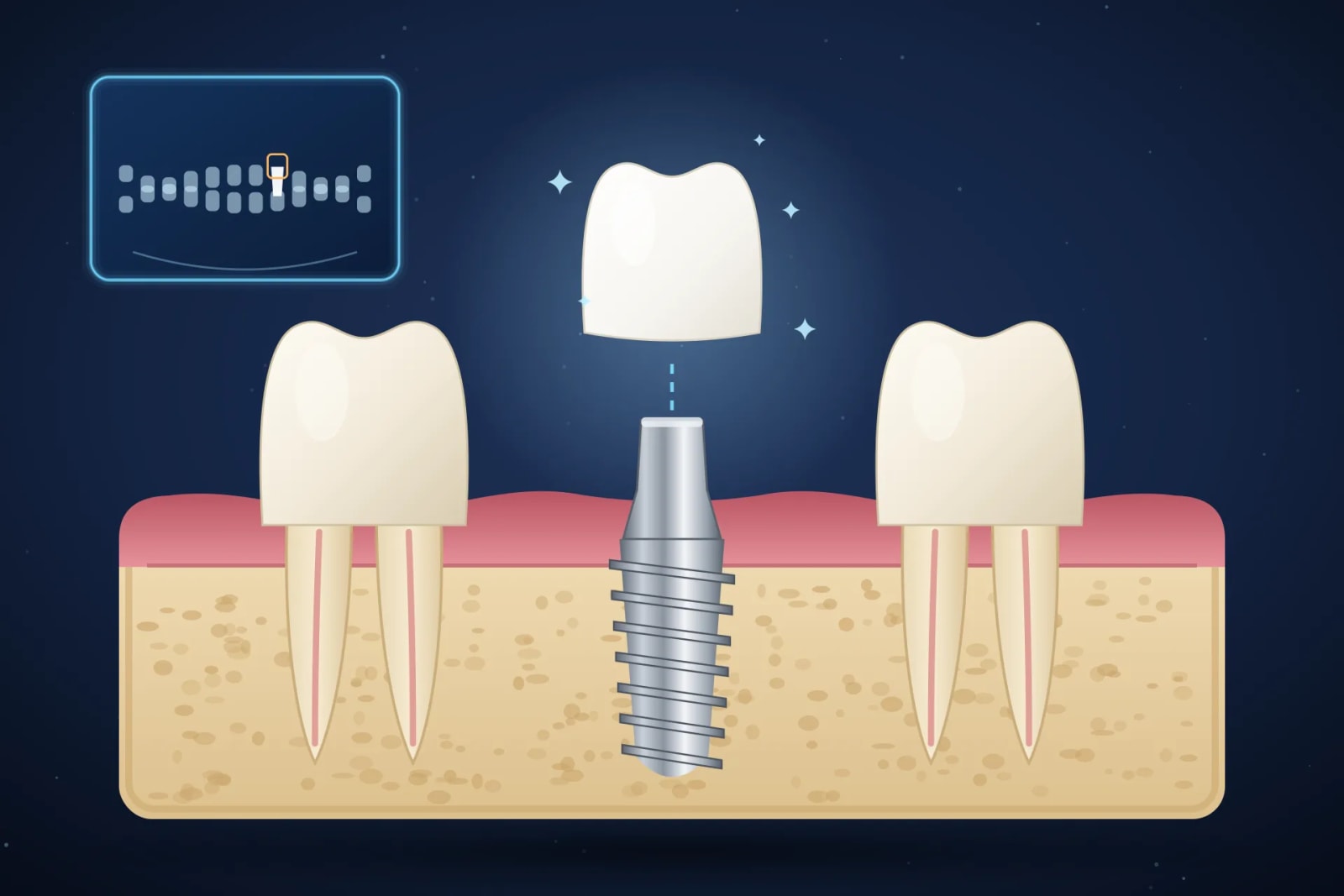
An implant has three parts:
- Implant screw: acts as the root of the tooth
- Abutment: a small connector piece attached to the implant
- Crown: the visible tooth, such as a porcelain or zirconia crown
Who is a good candidate?
You are likely to be a good candidate if you have:
- Healthy gums
- Enough bone volume
- A missing tooth, or a tooth that can’t be restored
- Good overall health
- Good oral hygiene habits
Advantages and risks
Dental implants offer strong functional and aesthetic benefits but, like any procedure, they also come with certain risks to consider.
Advantages
- Natural appearance and feel
- Long-lasting, durable structure
- Strong chewing ability
- Prevents bone loss
- Doesn’t harm neighbouring teeth
- Stable and comfortable, unlike removable dentures
Risks (rare)
- Infection at the implant site
- Nerve irritation
- The implant not integrating with the bone
- A longer healing time
- Lower success rates in smokers
How the procedure works
Examination and imaging
Your dentist carries out an oral examination and takes an X-ray or a 3D CT scan to assess your bone density. The clinic then prepares a customised treatment plan for you.
With Lumben, your uploaded X-ray can be analysed by our AI-supported system to provide an early assessment of bone quality, potential treatment needs and overall suitability, before your clinical visit.
Implant placement
The titanium screw is placed into the jawbone under local anaesthesia.
Osseointegration (healing phase)
The bone integrates with the implant. This usually takes 6–12 weeks, depending on your bone health.
Abutment placement
A small connector piece, the abutment, is attached to the implant.
Final crown placement
A porcelain or zirconia crown is placed, restoring your chewing function and the look of your smile.
Healing process
Healing happens in stages:
First 24 hours
- Mild swelling or discomfort is normal
- Use a cold compress
- Avoid hot drinks and intense exercise
Up to 1 month
- Your soft tissues heal
- Most people return to daily life within 1–2 days
Full healing
- Bone integration takes 6–12 weeks
- Stopping smoking speeds up healing and improves success
Aftercare and how long implants last
To keep your implant healthy:
- Brush and floss daily
- Avoid very hard foods
- Visit your dentist every 6 months
- Maintain excellent oral hygiene
How long do dental implants last?
With proper care, dental implants can last 10–25 years, and often a lifetime. The crown on top may need replacing after 10–15 years. The American Dental Association (ADA) reports that dental implants have a 95–98% success rate.
What affects the cost of a dental implant?
The cost of a dental implant varies from person to person. The main factors are:
- The implant material and brand
- The crown type (porcelain, zirconia or E-max)
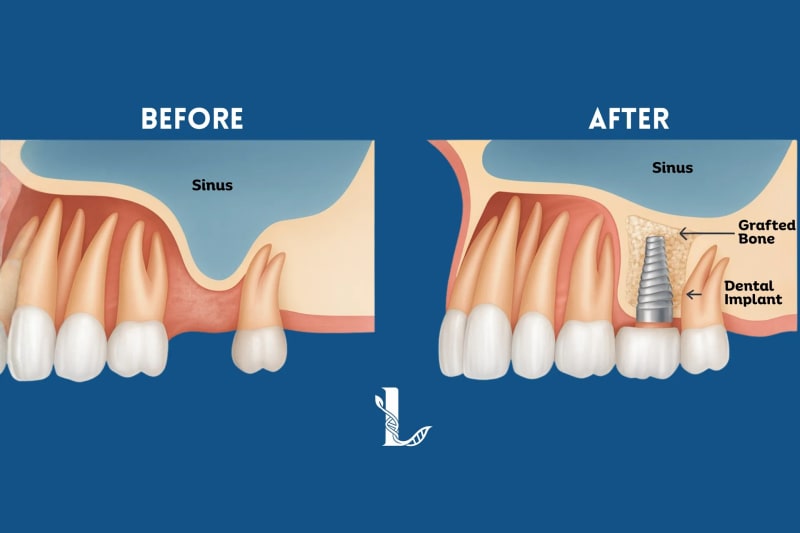
- Whether you need bone grafting
- The tooth location (front teeth often cost more)
- Whether digital 3D guided surgery is used
- The dentist’s experience
- The clinic’s standards and technology
Frequently Asked Questions
What are the parts of a dental implant?
An implant has three parts: the implant screw, which acts as the root; the abutment, a small connector; and the crown, which is the visible tooth.
Does getting a dental implant hurt?
The implant is placed under local anaesthesia. Afterwards, mild swelling or discomfort in the first 24 hours is normal, and you can use a cold compress.
How long does it take for an implant to heal?
The bone usually integrates with the implant in 6–12 weeks, depending on your bone health. Most people return to daily life within 1–2 days.
Who is a good candidate for a dental implant?
You are likely to be a good candidate if you have healthy gums, enough bone volume, a missing tooth or one that can’t be restored, good overall health and good oral hygiene habits.
How long do dental implants last?
With proper care, dental implants can last 10–25 years, and often a lifetime. The crown on top may need replacing after 10–15 years.
What are the risks of dental implants?
Risks are rare, but they include infection at the implant site, nerve irritation, the implant not integrating with the bone and a longer healing time. Success rates are lower in smokers.
How do I look after my dental implant?
Brush and floss daily, avoid very hard foods, visit your dentist every 6 months and maintain excellent oral hygiene.
How much does a dental implant cost?
The price depends on the implant material and brand, the crown type, whether you need bone grafting, the tooth location, whether digital 3D guided surgery is used, and the dentist’s experience and clinic’s technology.
AI-Assisted Analysis
Could a dental implant be right for you?
Upload your X-ray to Lumben for an AI-assisted early assessment of whether a dental implant may be suitable for you.
Analyse my X-ray →