

Dental Crown Treatment
A dental crown is a custom-made cap that fully covers a damaged, weakened or discoloured tooth. It restores the tooth’s shape, strength and appearance, and protects it from further damage.
On this page
Overview
A dental crown is a custom-made cap that fully covers a damaged, weakened or aesthetically compromised tooth. It restores the tooth’s shape, size, strength and appearance, and protects it from further damage.
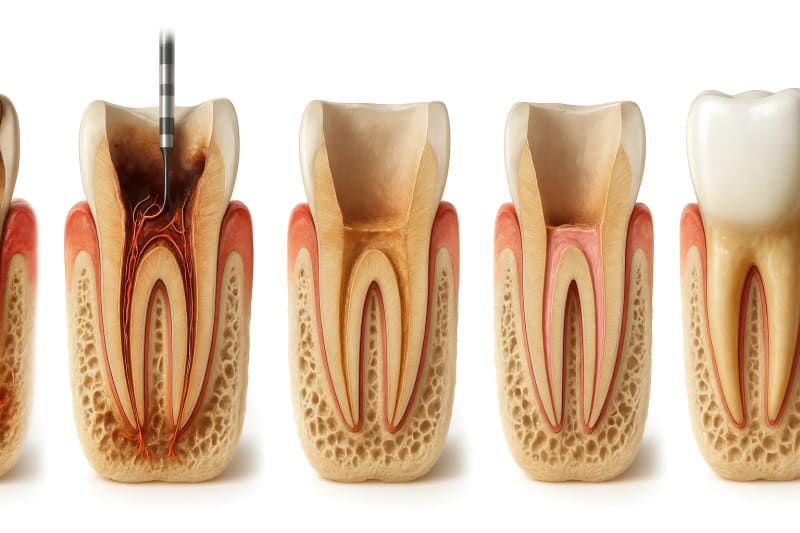
Crowns are most often used after root canal treatment, on broken or heavily filled teeth, and to improve both how your teeth work and how your smile looks.
Crowns can be made from several materials, including zirconia, porcelain, E-max and metal. Your dentist plans the crown type and material with you, based on where the tooth is and what you need from it.
Why you might need a dental crown
A crown may be recommended to protect, strengthen or improve the appearance of a tooth. Common reasons include:
- After root canal treatment
- Large fillings that weaken the tooth
- Cracked, fractured or worn-down teeth
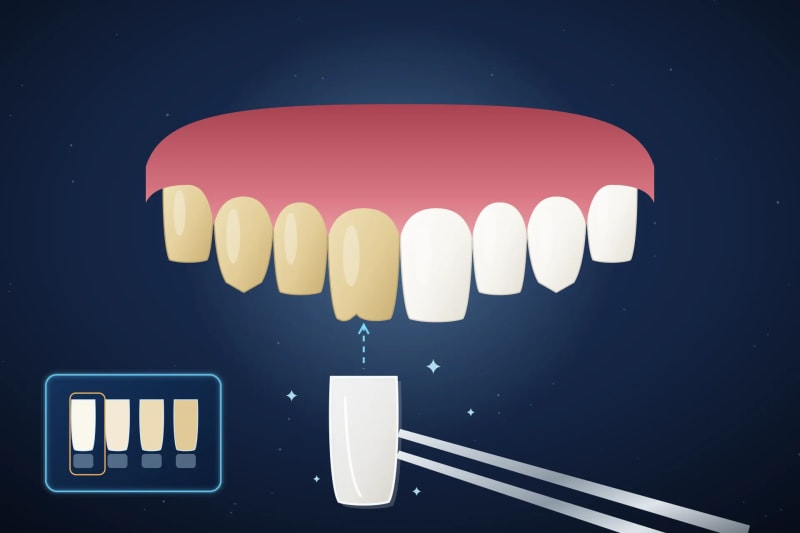
- Severely discoloured or misshapen teeth
- To cover a dental implant
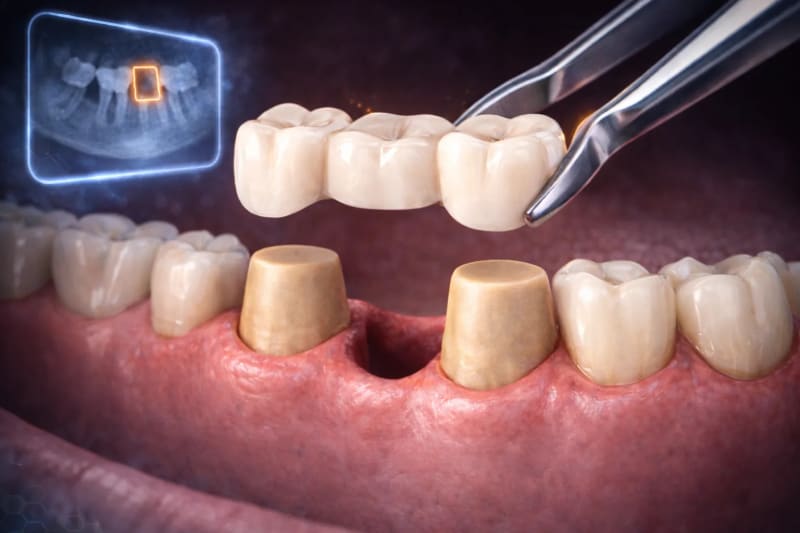
- To support a dental bridge
- To enhance the look of your smile
Crowns on dental implants
Crowns are also used to restore missing teeth on dental implants. With Lumben, AI-supported X-ray analysis can help assess bone quality and implant positioning to support the planning of your crown.
Who is a good candidate?
Most people with weakened, damaged or cosmetically compromised teeth are suitable for dental crowns. Good candidates include:
- Teeth that have had root canal treatment
- Teeth with large fillings
- Cracked or broken teeth
- Severely worn teeth
- People looking for long-term protection for a tooth
- People who want to improve how their teeth look
Types of dental crowns
Zirconia crowns
Very strong and durable, with a natural-looking finish. They are metal-free and an excellent choice for back teeth.
Porcelain crowns
Available as porcelain-fused-to-metal or full porcelain. They have a natural tooth colour, give a good aesthetic result and are suitable for both front and back teeth.
E-max (lithium disilicate) crowns
Highly aesthetic, with excellent translucency (the way natural enamel lets light through). They are ideal for front teeth and the teeth that show when you smile.
Metal crowns (gold or alloy)
Extremely durable but less aesthetic, so they are rarely used for teeth that are visible.
Advantages and risks
Advantages
- Restores strength and function
- Protects weakened teeth
- Improves the look of your smile
- Long-lasting solution
- Looks and feels natural
- Prevents further damage to the tooth
Risks (low)
- Temporary sensitivity
- Chipping of the crown (rare with modern materials)
- The crown may need replacing after many years
- Your bite may need adjusting
How the procedure works
Examination and X-ray
Your dentist checks the structure of your tooth and your bite. An X-ray shows the root, the surrounding bone and any previous treatments, and helps plan the right crown type and material.
With Lumben, your uploaded X-ray can be analysed by our AI-supported system to assess remaining tooth structure, root health and suitability for a crown, helping to show whether additional treatment (such as a root canal or a build-up) may be needed before crowning.
Tooth preparation
The tooth is reshaped to make room for the crown. Old fillings or decay are removed, and a core build-up (a filling that rebuilds the base of the tooth) may be placed if needed.
Digital scan or impression
Your dentist takes a digital intraoral scan or a traditional impression. Your crown is then custom designed for fit and bite, and its shade is matched to your natural teeth.
Temporary crown
A temporary crown is placed to protect your tooth while the permanent crown is being made, so you can keep using your teeth normally.
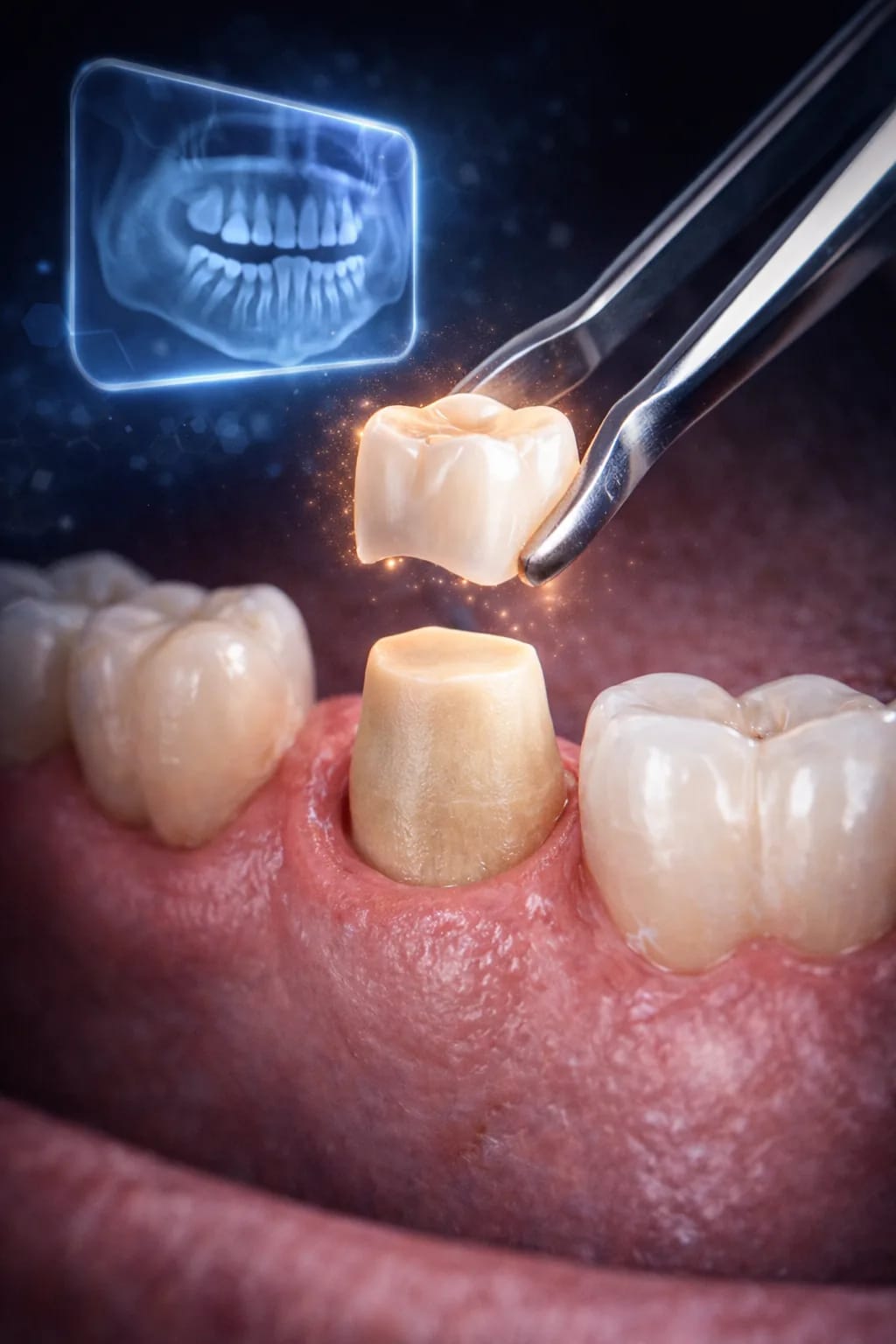
Final crown placement
Your permanent crown is fitted and adjusted, your bite is checked, and the crown is permanently bonded in place.
What to expect after treatment
Most people resume their normal activities immediately. Typically:
- You may have mild sensitivity for a few days
- Your bite may feel different at first
- You can chew normally within 24 hours
Aftercare and how long a crown lasts
To keep your crown in good condition:
- Brush and floss daily
- Avoid chewing very hard foods
- Wear a night guard if you grind your teeth
- Attend regular dental check-ups
How long do dental crowns last?
A well-made dental crown can last 10–15+ years, and often longer with proper care. How long yours lasts depends on:
- Your oral hygiene
- The crown material
- Your bite forces (grinding or clenching)
- Regular dental check-ups
- Avoiding hard foods and damaging habits
What affects the cost of a dental crown?
The cost of a dental crown varies from person to person. The main factors are:
- The crown material (zirconia, E-max, porcelain or metal)
- The position of the tooth (front or back)
- Whether a core build-up is needed
- Whether the tooth has had root canal treatment
- The clinic’s technology and digital scanning
- The quality of the dental laboratory and the level of customisation
Frequently Asked Questions
Does getting a crown hurt?
The procedure is done under local anaesthesia, so it is generally comfortable.
Do I need a crown after a root canal?
For back teeth, almost always yes. For front teeth, it depends on how much healthy tooth structure is left.
How long does the crown process take?
Usually 1–2 visits over 1–2 weeks. Some clinics offer same-day crowns.
Can a crown fall off?
Rarely. If it does, it can usually be cemented back in place as long as it isn’t damaged.
How long does a dental crown last?
A well-made crown can last 10–15+ years, and often longer with proper care. Its lifespan depends on your oral hygiene, the crown material, your bite forces, regular check-ups and avoiding hard foods and damaging habits.
Which type of crown is right for me?
It depends on the tooth. Zirconia is an excellent choice for back teeth, E-max is ideal for front teeth and the smile zone, porcelain suits both front and back teeth, and metal crowns are rarely used for visible teeth. Your dentist plans the crown type and material with you.
How much does a dental crown cost?
The price depends on the crown material, the position of the tooth, whether a core build-up is needed, whether the tooth has had root canal treatment, and the clinic’s technology and lab quality.
AI-Assisted Analysis
Not sure if your tooth needs a crown?
Upload your X-ray to Lumben for an AI-assisted early assessment of whether your tooth needs a crown, which crown type may suit your case, and whether any other treatment is needed first.
Analyse my X-ray →