

Root Canal Treatment
Root canal treatment removes infected or inflamed pulp from inside a tooth and seals the root. It stops pain, prevents further damage and saves your natural tooth.
On this page
Overview
Root canal treatment removes infected or inflamed pulp (the soft tissue inside the tooth that contains the nerve) and seals the root to stop pain and prevent further damage.
The treatment cleans, disinfects and seals the inner canals of the tooth, so the tooth can keep working normally without pain. It:
- Treats deep decay, cracks, trauma or nerve infection
- Prevents the spread of bacteria
- Saves your natural tooth structure
Why you might need a root canal
A root canal is needed when the pulp inside the tooth becomes infected or irreversibly damaged.
Common causes
- Deep dental decay reaching the nerve
- Severe tooth fractures
- Repeated dental procedures on the same tooth
- Trauma, such as a blow or impact
- Untreated gum disease spreading inwards
Symptoms that may mean you need one
- Persistent pain
- Sensitivity to hot or cold
- Swelling or tenderness
- Darkening of the tooth
- A gum boil (an abscess on the gum)
Who is a good candidate?
Most people with an infected but salvageable tooth are suitable. Good candidates include:
- Teeth with deep decay but enough healthy structure left
- People with a nerve infection or abscess
- People who want to avoid extraction
- People without severe bone loss around the tooth
- People whose general health conditions are manageable
Advantages and risks
Advantages
- Saves your natural tooth
- Stops pain and infection
- Prevents tooth loss
- Restores normal chewing and function
- Long-lasting when crowned
- High success rate (over 90%)
Risks (low)
- The tooth can fracture without a crown
- Reinfection (rare)
- Discomfort for a few days
- Complex tooth anatomy may need specialist care
How the procedure works
Examination and X-ray
Your dentist evaluates the tooth. An X-ray shows how far the infection has spread and the structure of the canals.
With Lumben, your uploaded X-ray can be analysed by our AI-supported system to provide an early assessment of bone quality, potential treatment needs and overall suitability, before your clinical visit.
Local anaesthesia
The tooth is fully numbed, so the procedure is usually painless.
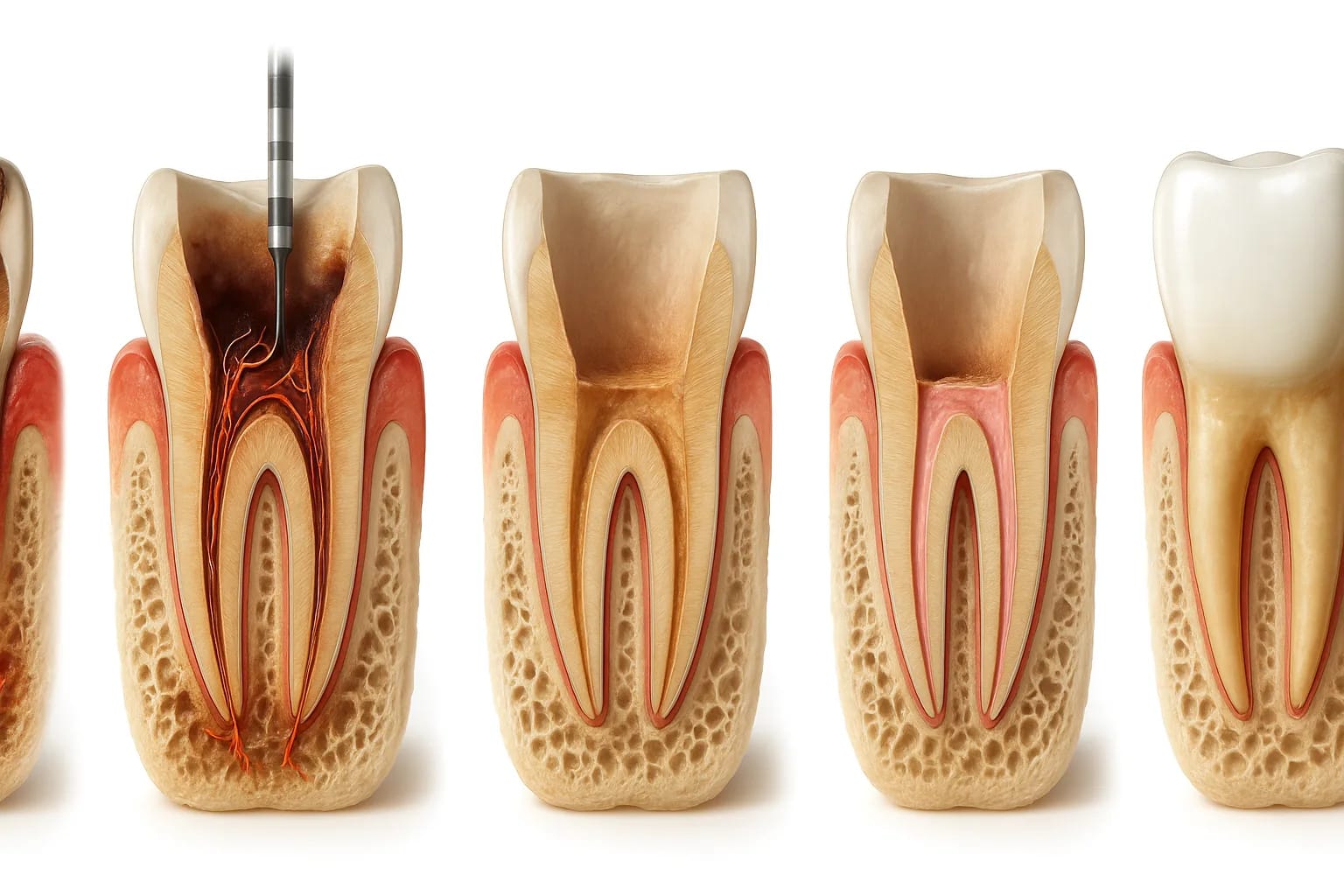
Cleaning the root canals
Your dentist opens the top of the tooth and removes the infected pulp. The canals are then shaped and disinfected using special files and medicated solutions.
Filling the canals
The cleaned canals are sealed with gutta-percha, a rubber-like dental filling material, to prevent reinfection.
Restoration
A filling or crown is placed on top of the tooth. A crown is recommended for long-term strength and to help prevent fractures.
Healing and recovery
Most people return to normal activities the same day. A typical recovery looks like this:
- Mild soreness for 1–3 days
- Over-the-counter pain relief is usually enough
- Eating on the opposite side is recommended at first
Aftercare and how long a root canal lasts
To help your tooth heal well:
- Avoid chewing hard foods on the treated tooth
- Keep the area clean
- Complete your crown placement as soon as possible
- Contact your dentist if you notice swelling, severe pain or problems with your bite
How long does a root canal last?
A properly treated root canal can last 10–20+ years, and often longer with a crown. Success depends on your oral hygiene and how structurally sound the tooth is. The main longevity factors are:
- Getting a crown after treatment (strongly recommended)
- Avoiding hard foods
- Good brushing and flossing
- Regular dental check-ups
- No untreated cracks or cavities around the filling
What affects the cost of a root canal?
The cost of root canal treatment varies from person to person. The main factors are:
- The position of the tooth (front teeth cost less; molars are more complex)
- How severe the infection is
- Whether you need retreatment or a crown
- Whether you are treated by a general dentist or a specialist (an endodontist, a root canal specialist)
- The clinic’s imaging and digital tools
- The number of appointments needed
Frequently Asked Questions
Is a root canal painful?
With modern anaesthesia, the procedure is comfortable. Pain usually comes from the infection, not from the treatment.
Do I need a crown after a root canal?
For back teeth, almost always yes. For front teeth, it depends on how much healthy tooth structure is left.
How long does a root canal take?
Usually 45–90 minutes, sometimes over two visits.
Can a root canal fail?
Rarely. Reinfection can happen if the tooth cracks, a new cavity forms, or the canals were unusually complex.
Is extraction better than a root canal?
In most cases, saving your natural tooth is the healthier, more functional option.
How long does a root canal last?
A properly treated root canal can last 10–20+ years, and often longer with a crown. Success depends on your oral hygiene and how structurally sound the tooth is.
How long does recovery take after a root canal?
Most people return to normal activities the same day. Mild soreness for 1–3 days is typical, and over-the-counter pain relief is usually enough.
AI-Assisted Analysis
Could your tooth be saved with a root canal?
Upload your X-ray to Lumben for an AI-assisted early assessment of whether your tooth may be suitable for root canal treatment.
Analyse my X-ray →