

Tooth Extraction
A tooth extraction is the careful removal of a damaged, infected or problematic tooth from the jawbone. It is done when a tooth can’t be saved, and it helps eliminate pain and stop infection.
On this page
Overview
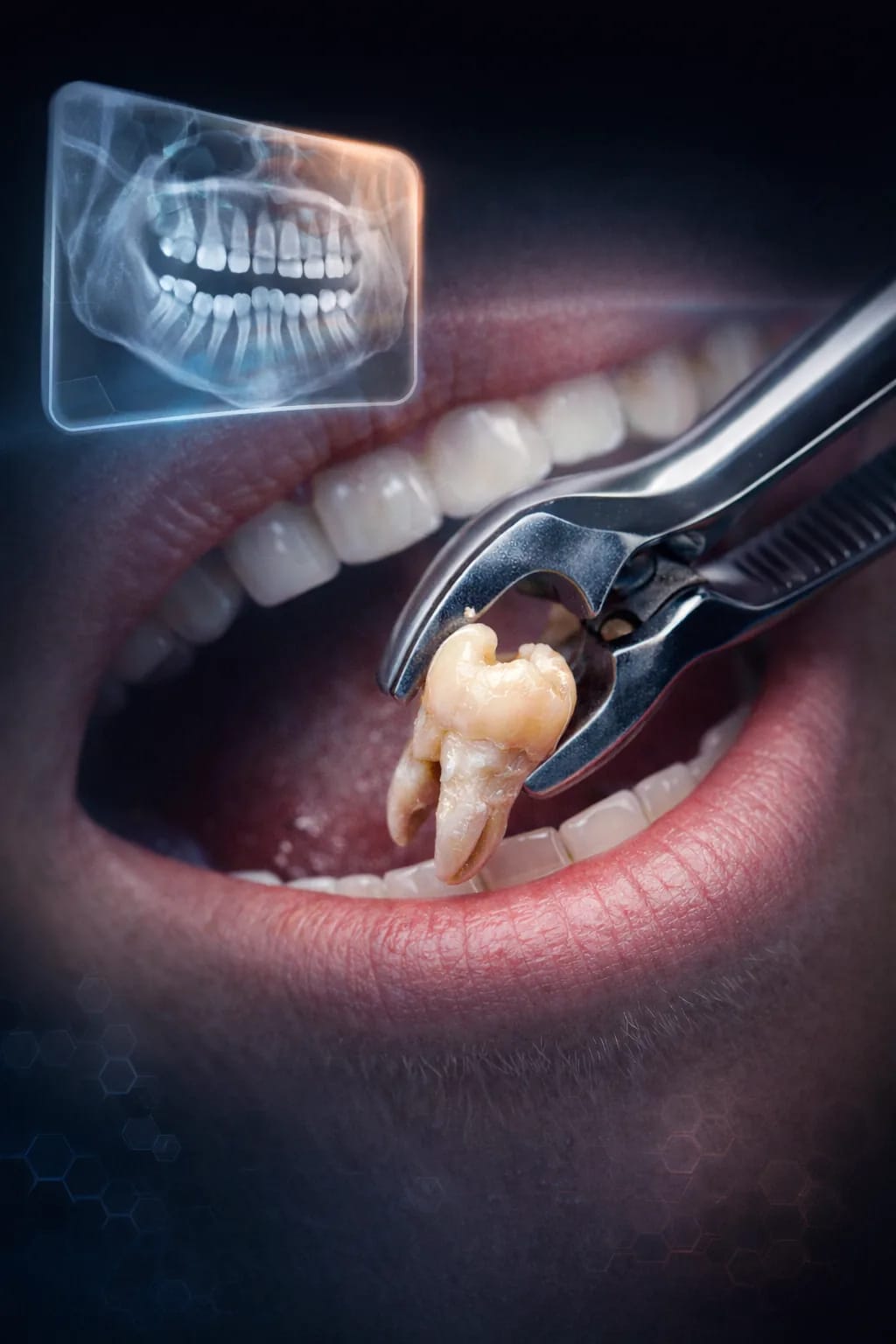
A tooth extraction is a dental procedure in which a damaged, infected or problematic tooth is carefully removed from the jawbone. It is done when a tooth can’t be saved with treatments such as fillings, root canal treatment or crowns.
Tooth extraction is a common and safe procedure. It helps eliminate pain, stop infection, and protect the surrounding teeth and bone.
Depending on the tooth, your dentist carries out either a simple extraction, for a tooth that is fully visible in the mouth, or a surgical extraction, for a tooth that is broken, impacted (hasn’t come through properly) or below the gum line.
Why a tooth may need to be extracted
A tooth may need to be removed when it is beyond repair or poses a risk to your oral health. Common reasons include:
- Severe tooth decay that can’t be restored
- Advanced gum disease (periodontitis) that makes the tooth loose
- Cracked or fractured teeth below the gum line
- Repeated infection after a failed root canal treatment
- Impacted or problematic wisdom teeth
- Overcrowding, when space is needed for orthodontic treatment
- Trauma or injury to the tooth
Who is a good candidate?
Most people who have a severely damaged or infected tooth are suitable for extraction. Good candidates include:
- Teeth that can’t be restored
- Teeth causing repeated infections
- Teeth that are loose because of gum disease
- Impacted teeth causing pain or damage
- People preparing for orthodontic treatment
Simple vs surgical tooth extraction
Simple extraction
Used when the tooth is fully visible in the mouth. The area is numbed with local anaesthesia, and the tooth is loosened and removed with dental instruments. It is a quick procedure with minimal trauma.
Surgical extraction
Needed when the tooth is broken, impacted or below the gum line. A small incision (cut) is made in the gum, and the tooth may be removed in sections. It is common for wisdom teeth and complex cases.
Advantages and risks
Advantages
- Eliminates pain and infection
- Prevents the spread of bacteria
- Protects the surrounding teeth and bone
- Improves your overall oral health
- Makes future treatments possible, such as implants or bridges
Risks (low)
- Temporary swelling or discomfort
- Bleeding for a short time
- Dry socket, when the blood clot is lost too early (rare with proper care)
- Temporary jaw stiffness
- Infection (rare with good hygiene)
How the procedure works
Examination and X-ray
Your dentist examines the tooth and the bone around it. An X-ray or CBCT scan (a 3D X-ray) is used to check the roots, any infection and the condition of the bone.
With Lumben, your uploaded X-ray can be analysed by our AI-supported system to give an early assessment of tooth condition, bone support, and whether extraction or tooth-saving options may be possible, before your clinical visit.
Local anaesthesia
The area is fully numbed, so the procedure is typically painless. Sedation options may be available if you feel anxious.
Tooth removal
The tooth is gently loosened and removed with specialised dental instruments. In surgical cases, a small incision may be made in the gum.
Cleaning and clot formation
The extraction site is cleaned. A blood clot forms naturally to protect the bone, and gauze is placed to control bleeding.
Post-extraction care
You receive instructions for healing, and stitches may be placed if needed. Planning to replace the tooth, for example with an implant or a bridge, may begin.
Healing and recovery
Most people return to normal activities within 24–48 hours. A typical recovery looks like this:
- Mild swelling and soreness for 2–3 days
- Light bleeding in the first 24 hours
- Soft foods are recommended
Replacing the extracted tooth
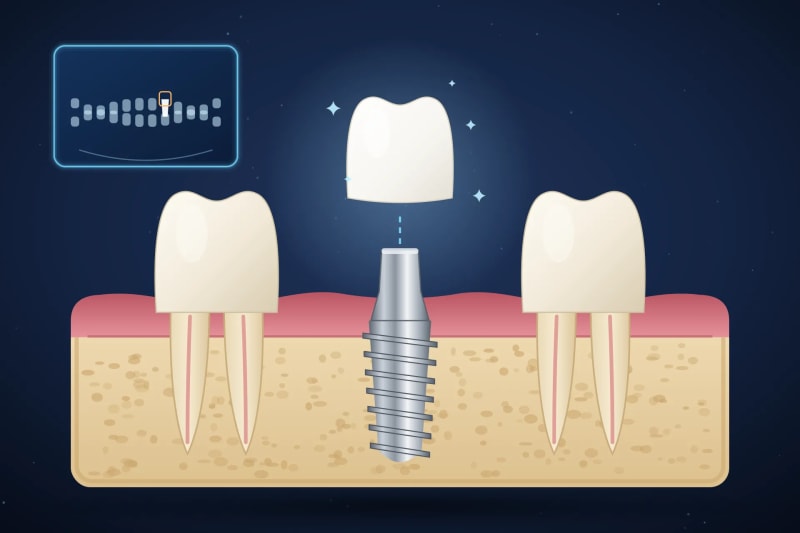
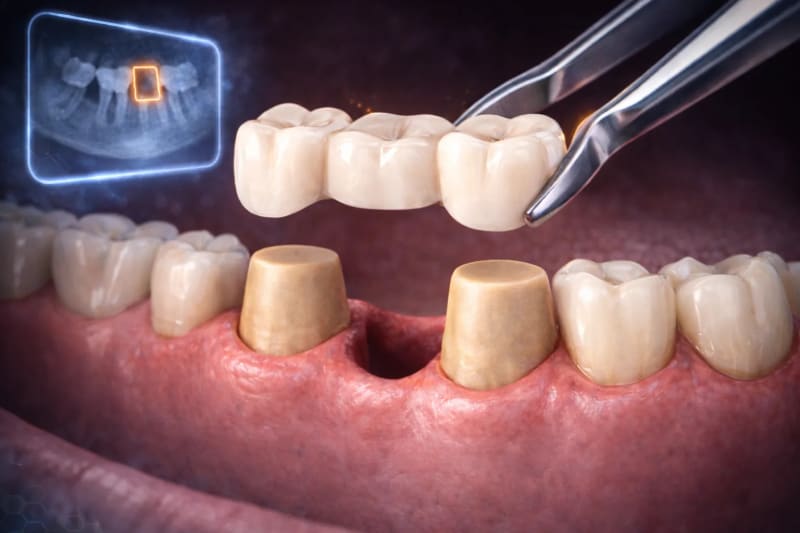
Replacing a missing tooth is important to prevent bone loss and stop nearby teeth from shifting. Common options are:
- A dental implant (the most natural solution)
- A dental bridge
- A partial denture
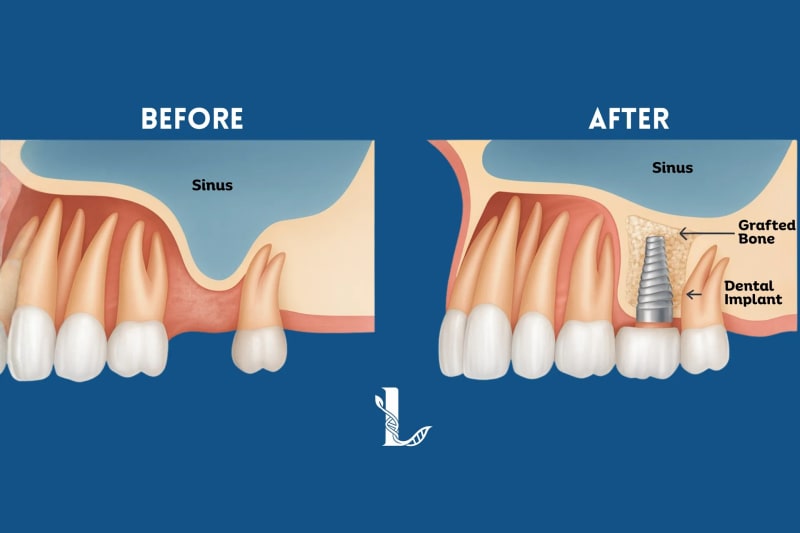
With Lumben, AI-supported X-ray analysis can help assess bone quality and whether you may be suitable for immediate implant placement, or whether bone grafting may be needed.
Tips for better healing
To help your extraction site heal well:
- Avoid smoking and using straws, to help prevent dry socket
- Apply a cold compress for swelling
- Take prescribed or over-the-counter pain relief
- Eat soft foods
- Keep the area clean as instructed
What affects the cost of a tooth extraction?
The cost of a tooth extraction varies from person to person. The main factors are:
- Whether it is a simple or surgical extraction
- The position of the tooth (front tooth or molar)
- Whether the tooth is impacted or broken
- Whether you need sedation
- The clinic’s technology and imaging
- Additional procedures, such as bone grafting or implant planning
Frequently Asked Questions
Is tooth extraction painful?
With modern anaesthesia, the procedure is comfortable. Any pain is usually caused by the infection, not by the extraction itself.
How long does a tooth extraction take?
Most simple extractions take 20–40 minutes. Surgical extractions may take longer.
What is the difference between a simple and a surgical extraction?
A simple extraction is used when the tooth is fully visible in the mouth: it is loosened and removed with dental instruments. A surgical extraction is needed when the tooth is broken, impacted or below the gum line, and involves a small incision in the gum.
How long does recovery take after a tooth extraction?
Most people return to normal activities within 24–48 hours. Mild swelling and soreness typically last 2–3 days, with light bleeding in the first 24 hours.
What is dry socket?
Dry socket occurs if the blood clot is lost too early. Following your post-op instructions, such as avoiding smoking and straws, significantly reduces this risk.
Can I get an implant after extraction?
In many cases, yes. Some patients are eligible for immediate implant placement, while others may need healing time or bone grafting first.
How can I replace an extracted tooth?
Common options are a dental implant, a dental bridge or a partial denture. Replacing a missing tooth is important to prevent bone loss and stop nearby teeth from shifting.
AI-Assisted Analysis
Can your tooth be saved, or does it need extracting?
Upload your X-ray to Lumben for an AI-assisted early assessment of whether your tooth can be saved, needs extraction, or may be suitable for immediate implant placement.
Analyse my X-ray →