

Dental Implant Treatment
A dental implant is an artificial tooth root, usually made from titanium or a titanium alloy, that is placed in the jawbone to support a crown, bridge or denture. It can replace one tooth, several teeth or help stabilise a full denture without relying on neighbouring teeth for support.
On this page
Overview
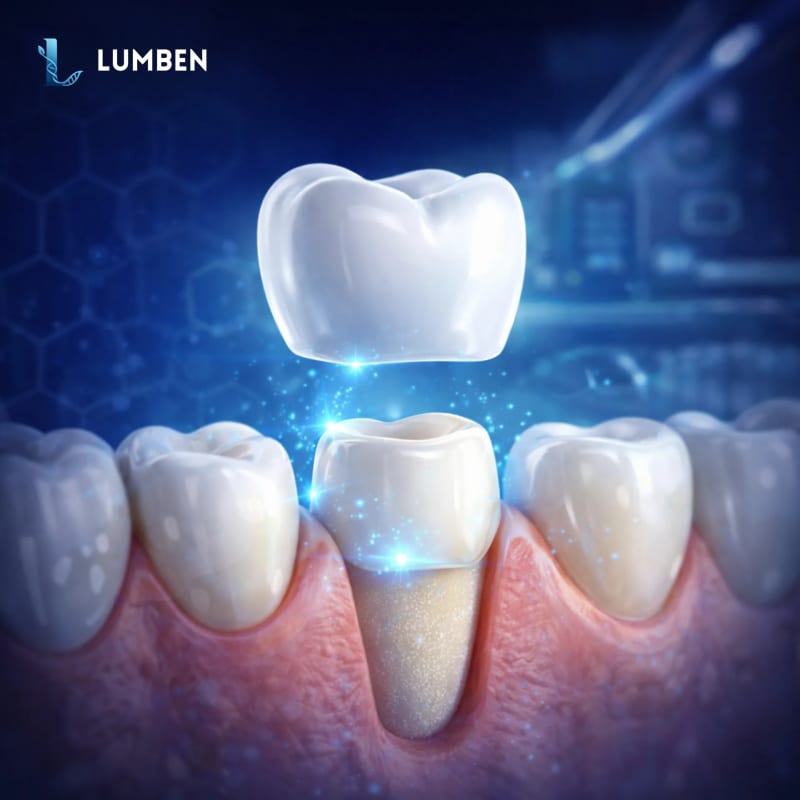
A dental implant is a small screw-shaped fixture placed into the jawbone where a tooth is missing. During healing, the surrounding bone grows closely around the implant in a process called osseointegration. Once the implant is stable, it can support a replacement tooth.
An implant restoration usually has three parts:
- Implant: the part placed in the jawbone
- Abutment: the connector between the implant and the replacement tooth
- Crown, bridge or denture: the visible part used for chewing and smiling
Implant treatment is a planned process rather than a single appointment. Your dentist needs to assess your mouth, gums, bite, general health and available bone before recommending it. A dental X-ray is part of that assessment; three-dimensional CBCT imaging may also be required when more anatomical detail is needed.
Why you might need a dental implant
A dental implant may be considered when you have:
- One missing tooth
- Several missing teeth
- A loose or uncomfortable denture
- A tooth that cannot be predictably restored and may need extraction
- A gap where you would prefer not to prepare healthy neighbouring teeth for a conventional bridge
- Adequate oral health and a preference for a fixed, long-term replacement option
Leaving a gap is sometimes a reasonable choice, depending on its position and effect on function. Other options can include a conventional bridge, a resin-bonded bridge or a removable denture. Your dentist should explain the advantages, limitations and maintenance needs of each option.
Who is a good candidate?
Suitability depends more on health, oral conditions and healing capacity than on age alone. A good candidate usually has:
- Healthy or stabilised gums
- No untreated tooth decay or active oral infection
- Enough jawbone for stable implant placement, or a realistic grafting option
- Good daily oral-hygiene habits
- General health that allows minor oral surgery and healing
- Realistic expectations about timing, maintenance and possible complications
Factors that can make treatment more complex or reduce predictability include smoking or tobacco use, uncontrolled diabetes, active gum disease, poor plaque control, heavy tooth grinding, some medicines and previous radiotherapy to the jaws. These do not always rule out implants, but they must be discussed with the treating clinician. Never stop prescribed medicine without advice from the clinician who manages it.
Types of implant treatment
Single-tooth implant
One implant supports one custom-made crown. This can replace a missing tooth without preparing the adjacent teeth for a conventional bridge.
Implant-supported bridge
Two or more implants support a bridge that replaces several missing teeth. An implant is not necessarily required for every missing tooth.
Implant-retained denture
Implants provide attachment points that improve the stability of a removable denture. The denture still needs to be removed and cleaned as instructed.
Fixed full-arch restoration
A carefully planned group of implants supports a fixed bridge that replaces most or all teeth in one jaw. This is more complex treatment and requires detailed assessment, maintenance planning and discussion of alternatives.
Immediate and delayed approaches
In selected cases, an implant may be placed at the same appointment as tooth extraction. A temporary tooth may sometimes be connected early. This is not the right approach for every site: infection, bone volume, gum condition, bite and initial implant stability all affect the decision. “Same-day teeth” does not mean that healing is complete on the day of surgery.
Advantages and risks
Advantages
- Can look, feel and function similarly to a natural tooth
- Does not usually require drilling healthy neighbouring teeth
- Can improve the stability of bridges and dentures
- Helps preserve bone around the implant site, although it cannot prevent every natural change in the jaw
- Can provide a long-term tooth-replacement option with proper care
Risks and limitations
- Temporary pain, swelling, bruising or minor bleeding after surgery
- Infection or delayed healing
- Failure of the implant to integrate with the bone
- Injury or altered sensation involving nearby nerves, particularly in some lower-jaw sites
- Sinus-related complications in some upper-jaw sites
- Gum recession or an aesthetic result that differs from expectations
- Loosening, wear or fracture of the crown, screw or other components
- Inflammation around the implant (peri-implant mucositis) or progressive bone loss around it (peri-implantitis)
- Need for additional treatment, repair or implant removal
Your individual risk depends on the site, anatomy, health, oral hygiene, smoking status, bite and treatment complexity. Your dentist should explain material risks that apply specifically to you.
How the procedure works
Examination and imaging
Your dentist reviews your medical and dental history and examines your teeth, gums and bite. Dental X-rays help assess the area. A CBCT scan may be used to evaluate the three-dimensional position of the bone and nearby structures such as nerves or sinuses.
With LUMBEN, an uploaded dental X-ray can support an AI-assisted early review and help structure questions for your clinical appointment. An online review or a two-dimensional image alone cannot confirm implant suitability, bone quality or the final implant position. These decisions require professional interpretation, an in-person examination and, when indicated, further imaging.
Treatment planning
Your dentist plans the number and position of implants and the final crown, bridge or denture. Planning should begin with the intended final tooth position so that function, cleaning and appearance guide implant placement.
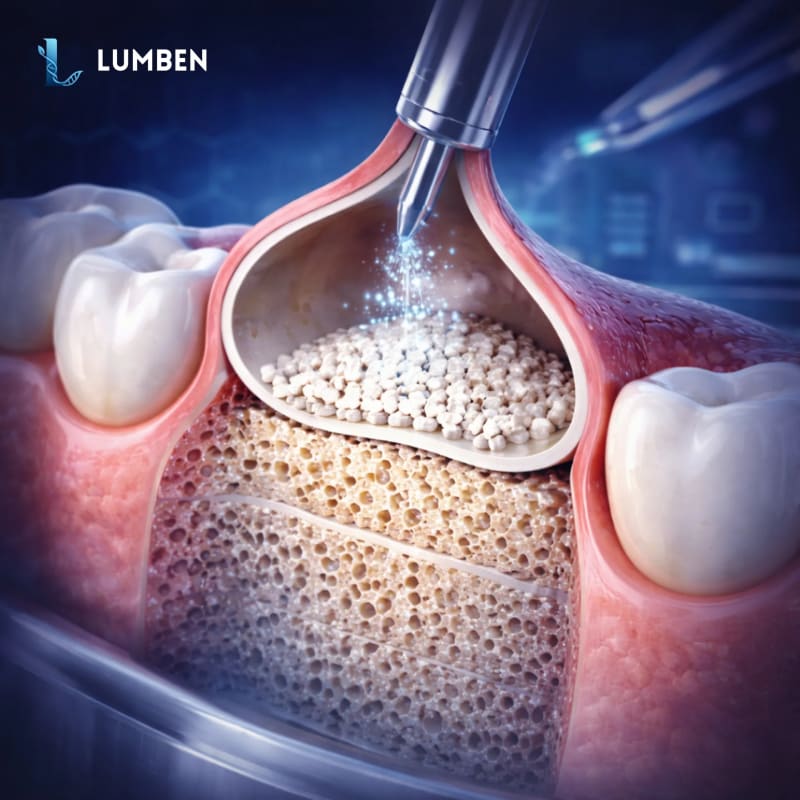
If a damaged tooth remains, extraction may happen before implant placement or at the same visit. If bone is too narrow or too low, a bone graft or sinus lift may be recommended. Grafting can sometimes be performed with implant placement; in other cases it needs a separate healing period.
Implant placement
The area is numbed with local anaesthetic. The dentist opens the gum when needed, prepares a precise channel in the jawbone, inserts the implant and places a healing component or closes the gum over it. Stitches may be used.
Placing a single straightforward implant often takes about 30 minutes, but appointments are longer when several implants, extractions or grafting are involved.
Healing and osseointegration
The gum usually heals over the first one to two weeks. The implant then remains protected while the bone joins to it. This commonly takes about two to six months and may take longer when grafting or other complex procedures are required.
A temporary tooth may be provided during healing. Whether it is removable or fixed, and whether it can be used for normal chewing, depends on the site and implant stability.
Abutment and final tooth
After integration, the implant is exposed if it was covered and a healing component may be fitted. A digital scan or impression records the implant and surrounding gum. The laboratory then makes the custom crown, bridge or denture. Your dentist fits it, checks the bite and explains how to clean around it.
What to expect after implant placement
Mild discomfort, swelling, bruising and light bleeding can occur after surgery. Swelling is often most noticeable during the first two or three days and should then begin to settle. Many people return to non-strenuous activities within a day or two, but recovery varies with the number of implants, grafting, sedation and the physical demands of work.
Follow the personalised instructions provided by your dental team. They may advise you to:
- Eat softer foods for the first few days
- Avoid disturbing the surgical area
- Clean the rest of your mouth normally and clean the treated site as directed
- Use prescribed or recommended medicines exactly as instructed
- Avoid smoking or vaping during healing
- Avoid strenuous exercise for the period your clinician recommends
- Attend the planned review appointment
Contact your dentist promptly if bleeding does not stop with pressure, pain or swelling becomes worse rather than better, you develop fever or discharge, the implant or temporary tooth feels mobile, or numbness persists or concerns you. Seek urgent medical help for breathing or swallowing difficulty, rapidly spreading swelling or another severe reaction.
Aftercare and how long implants last
Implants cannot develop tooth decay, but the tissues around them can become inflamed or lose supporting bone. Daily plaque removal and professional maintenance are essential.
To care for an implant:
- Brush twice daily with fluoride toothpaste
- Clean between and around the implant using the method recommended for your restoration
- Attend regular dental and hygiene reviews
- Have the implant, gums, bite and restoration checked
- Do not smoke
- Use a night guard if your dentist recommends one for grinding or clenching
- Report bleeding, swelling, discomfort, bad taste or movement early
Dental implants often function for many years, and many remain in use beyond ten years. No implant can be guaranteed for life. The implant fixture and the crown, bridge, screws or denture components have different maintenance and replacement needs. Longevity is influenced by oral hygiene, gum health, smoking, general health, bite forces, implant position and regular follow-up.
What affects the cost of dental implant treatment?
The cost varies because implant treatment is tailored to the person and the site. Important factors include:
- Number of missing teeth and implants required
- Type of final restoration: crown, bridge, overdenture or full-arch bridge
- Need for extraction, bone grafting or sinus lift
- Imaging and digital-planning requirements
- Temporary teeth during healing
- Implant and restorative components used
- Laboratory work and level of customisation
- Sedation, if clinically appropriate
- Clinician experience and case complexity
- Follow-up and long-term maintenance arrangements
Ask for a written plan that separates surgical, restorative and maintenance costs and explains what happens if extra procedures become necessary.
Sources and further reading
- Guy's and St Thomas' NHS Foundation Trust. Dental implants: overview. Reviewed December 2024. https://www.guysandstthomas.nhs.uk/health-information/dental-implants
- Cambridge University Hospitals NHS Foundation Trust. Dental implants in restorative dentistry. Approved patient information. https://www.cuh.nhs.uk/patient-information/dental-implants-in-restorative-dentistry/
- Cambridge University Hospitals NHS Foundation Trust. Insertion of dental implants. Approved 18 July 2025. https://www.cuh.nhs.uk/patient-information/insertion-of-dental-implants/
- Leeds Teaching Hospitals NHS Trust. Dental implants. Patient information. https://www.leedsth.nhs.uk/patients/resources/dental-implants/
- American Dental Association, MouthHealthy. Implants. https://www.mouthhealthy.org/all-topics-a-z/implants
- American Academy of Periodontology. Peri-implant diseases. https://www.perio.org/for-patients/periodontal-treatments-and-procedures/dental-implant-procedures/peri-implant-diseases/
Frequently Asked Questions
Does dental implant surgery hurt?
The area is numbed with local anaesthetic, so you should not feel sharp pain during placement. Pressure and vibration may be noticeable. Mild to moderate discomfort and swelling can occur afterwards and are usually managed with the aftercare and pain-relief plan provided by your clinician.
How long does dental implant treatment take?
One straightforward implant may be placed in about 30 minutes, but the complete process usually takes several months. Bone commonly needs two to six months to integrate with the implant. Extraction, grafting, healing needs and the design of the final tooth can extend the timeline.
Can I have an implant immediately after extraction?
Sometimes. Immediate placement may be possible when infection, bone, gum condition and implant stability are favourable. In other cases, allowing the site to heal first provides a more predictable foundation. Your dentist decides after clinical and imaging assessment.
Will I be without a tooth while the implant heals?
Not necessarily. A removable or fixed temporary tooth can often be provided. The safe option depends on appearance, bite, implant stability and whether grafting was performed. A temporary tooth may need reduced chewing pressure.
Do I need a bone graft?
Only if the implant site does not have enough suitable bone for stable, well-positioned placement. The need and type of graft are determined using your clinical examination and appropriate imaging; a panoramic X-ray alone may not provide enough three-dimensional information.
Are implants better than bridges or dentures?
Each option has benefits and trade-offs. Implants avoid preparing neighbouring teeth in many cases, but they require surgery, healing time, maintenance and sufficient bone. A bridge or denture may be more suitable depending on your health, teeth, preferences, timing and budget.
Can dental implants fail?
Yes. An implant may fail to join with the bone or may develop biological or mechanical complications later. Smoking, poor plaque control, active or previous gum disease, uncontrolled health conditions and excessive bite forces can increase risk. Early review and ongoing maintenance improve the chance of identifying problems promptly.
AI-Assisted Analysis
Preparing for an implant conversation?
Upload your dental X-ray to LUMBEN for an AI-assisted early review that can help organise possible areas for professional attention and the questions to discuss with a dentist. It is not a diagnosis and cannot confirm implant suitability or replace an examination, clinical history or any additional imaging your dentist considers necessary.
Analyse my X-ray →