

Gum Contouring (Gummy Smile Treatment)
Gum contouring (gingival reshaping) is a cosmetic dental procedure that removes or reshapes excess gum tissue for a more balanced smile. It can be done with a laser or with traditional surgical techniques.
On this page
Overview
Gum contouring, also known as gingival reshaping, is a cosmetic dental procedure that removes or reshapes excess gum tissue to create a more balanced and aesthetically pleasing smile. It:
- Improves the proportion between teeth and gums
- Can be performed with laser or traditional surgical techniques
- Is commonly used in cosmetic dentistry and smile makeovers
- Is often combined with veneers or crowns
What is a gummy smile?
A gummy smile is when too much gum tissue shows above the upper teeth as you smile, making the teeth look shorter than they really are.
- Studies suggest that more than 3–4 mm of visible gum is commonly perceived as a “gummy smile”
- A balanced smile depends on tooth size, lip movement and gum position
- Not all gummy smiles need treatment
Why people choose gum contouring
People choose gum contouring to improve the harmony of their smile when the gums dominate how the teeth look. Common reasons include:
- Teeth that look short despite being healthy
- An uneven or asymmetrical gum line
- Preparing for veneers or a “Hollywood smile”
- Wanting a more confident, natural smile
- Concerns about social and professional self-confidence
Who is a good candidate?
You may be a good candidate if you have
- Excess gum tissue covering healthy teeth
- Stable periodontal (gum) health
- No uncontrolled systemic conditions (conditions affecting your general health)
- Realistic aesthetic expectations
Gum contouring may not be ideal if you have
- Active gum disease
- Significant bone loss that hasn’t been corrected
- Untreated teeth grinding (bruxism) or bite problems
Gum contouring techniques
Laser gum contouring
- Uses soft-tissue dental lasers
- Minimal bleeding
- Faster healing and less discomfort
Surgical (scalpel-based) contouring
- Used when more tissue or bone needs adjusting
- May be combined with crown lengthening (a procedure that exposes more of the tooth)
Advantages and risks
Advantages
- Immediate smile improvement
- Minimally invasive, especially with a laser
- Long-lasting aesthetic results
- Enhances the results of veneers or crowns
Risks and considerations (low incidence)
- Temporary sensitivity
- Mild swelling
- Gum regrowth, which is rare and linked to poor oral hygiene
How the procedure works
Smile and gum line assessment
A thorough evaluation is essential before any aesthetic gum procedure. It includes a clinical examination and dental photographs, X-rays to assess the bone and tooth support, and an evaluation of your lip movement and smile dynamics.
With Lumben, you can upload your dental images for an AI-assisted smile and gum-to-tooth ratio analysis, helping determine whether gum contouring is truly needed or whether other treatments are more appropriate.
Local anaesthesia
The procedure is performed under local anaesthesia to keep you comfortable throughout treatment.
Laser or surgical reshaping
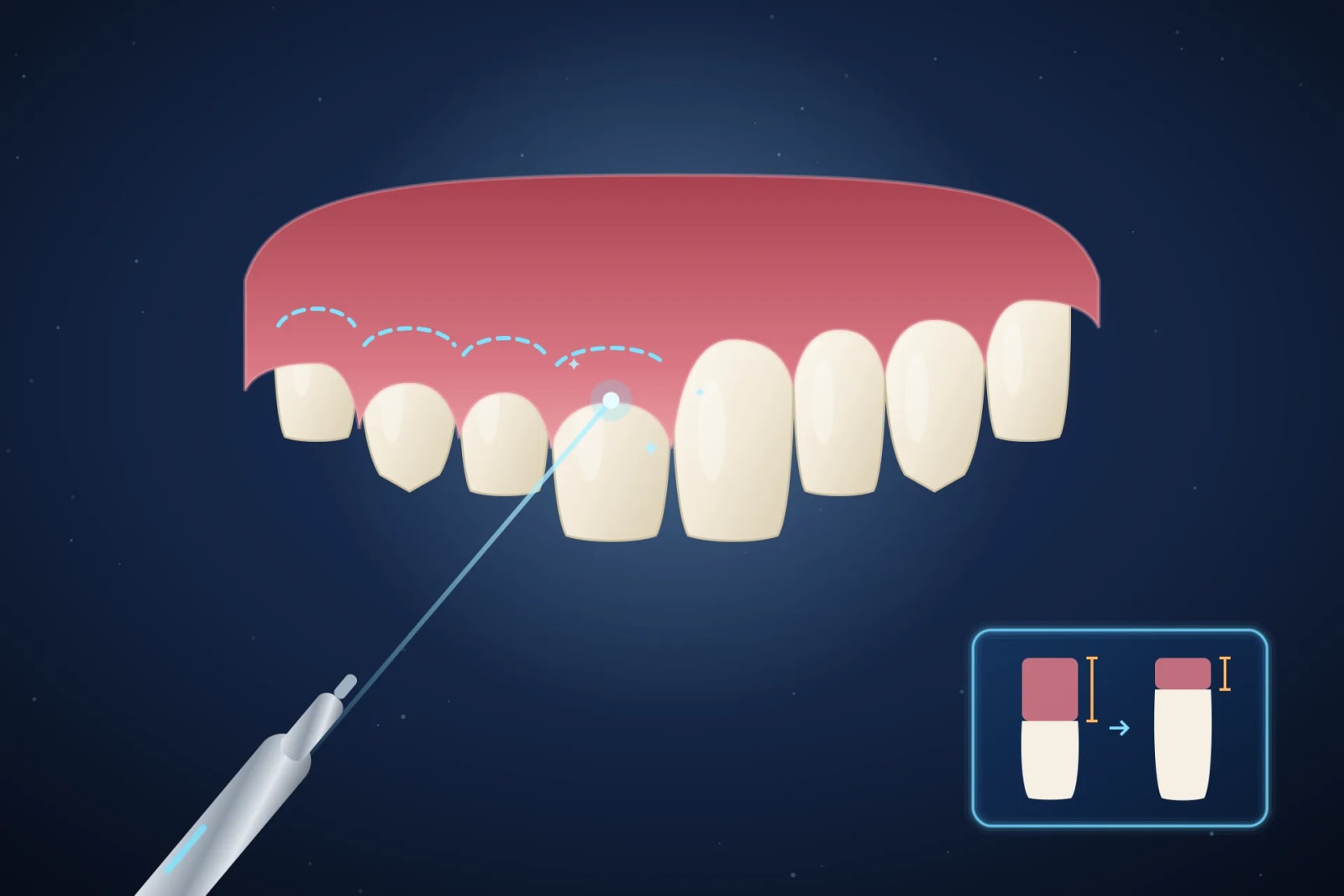
Your dentist removes excess gum tissue to expose more of the natural tooth, either with a soft-tissue dental laser or with a scalpel when more tissue or bone needs adjusting.
Final shaping and healing
The gum margins are refined for symmetry. The improvement is visible immediately, and healing begins the same day.
Healing and recovery time
Typical recovery time depends on the technique:
- Laser contouring: 7–14 days
- Surgical contouring: 2–4 weeks
Aftercare tips
To help your gums heal well:
- Eat soft foods for the first few days
- Avoid smoking
- Keep up gentle oral hygiene
- Follow your dentist’s instructions carefully
What affects the cost of gum contouring?
The cost of gum contouring varies from person to person. The main factors are:
- Laser or surgical method
- The number of teeth treated
- Whether it is combined with veneers or crowns
- The dentist’s expertise and the technology used
- Your geographic location
A personalised consultation is needed for an accurate price.
Laser vs surgical gum contouring
| Feature | Laser | Surgical |
|---|---|---|
| Bleeding | Minimal | Moderate |
| Healing time | ~1–2 weeks | ~2–4 weeks |
| Discomfort | Mild | Mild to moderate |
| Precision | High | High |
| Bone involvement | No | Sometimes |
Frequently Asked Questions
Is gum contouring painful?
It is performed under local anaesthesia, and discomfort is usually minimal.
Is the result permanent?
In most cases, yes. Gum regrowth is rare with proper care.
Is gum contouring necessary before veneers?
In some cases, yes, especially when the gums cover too much of the tooth.
Does every gummy smile need treatment?
No. Not all gummy smiles require treatment. A balanced smile depends on tooth size, lip movement and gum position, which is why a thorough assessment comes first.
How long does recovery take after gum contouring?
Typical recovery takes 7–14 days after laser contouring and 2–4 weeks after surgical contouring.
What is the difference between laser and surgical gum contouring?
Laser contouring uses soft-tissue dental lasers, with minimal bleeding, faster healing and less discomfort. Surgical contouring uses a scalpel and is used when more tissue or bone needs adjusting; it may be combined with crown lengthening.
Who is not a good candidate for gum contouring?
Gum contouring may not be ideal if you have active gum disease, significant bone loss that hasn’t been corrected, or untreated teeth grinding (bruxism) or bite problems.
AI-Assisted Analysis
Do you really need gum contouring?
Upload your dental images to Lumben. AI-assisted image analysis and dentist matching can help you understand whether gum contouring is necessary before you commit to treatment.
Analyse my X-ray →